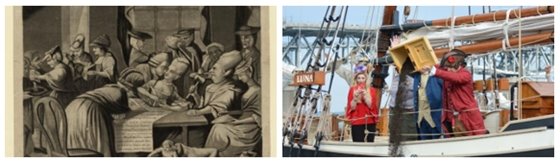
In response, the Thirteen Colonies organized a boycott of British tea entering the North American colonies. On November 1, 1774, Virginia passed a resolution boycotting all British imports of tea into the colony. Just six days later, residents of Yorktown boarded a ship, ironically named The Virginia, which was docked in port. It carried two chests of tea purchased by Williamsburg merchant John Prentis, which the residents promptly dumped overboard. In shame, John Prentis released an apology for purchasing the boycotted tea:
“It gives me much Concern to find that I have incurred the Displeasure of the York and Gloucester Committees, and thereby of the Publick in general, for my Omission in not countermanding the Order which I sent to Mr. Norton for two Half Chests of Tea; and do with Truth declare, that I had not the least Intention to give Offence, nor did I mean an Opposition to any measure for the publick Good. My Countrymen, therefore, it is earnestly hoped, will readily forgive me for an Act which may be interpreted so much to my Discredit; and I again make this publick Declaration, that I had not the least Design to act contrary to those Principles which ought to govern every Individual who has a just Regard for the Rights and Liberties of America.”
As a result of the American Revolution that followed, drinking tea became an “unpatriotic” act. Coffee and hot chocolate slowly became the preferred drinks of Americans. During the American Civil War, coffee became the standard-issued drink for Union and Confederate armies in the field. When these veterans returned home, their addiction to coffee followed them, contributing to the Starbucks culture we know and love today. Thankfully, we can drink tea today without attracting the suspicion of supporting the British Empire.
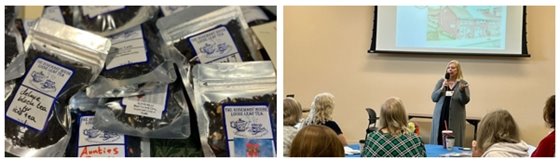
On Friday, November 7, the Yorktown Tea Festival returns. Immerse yourself in the world of tea as you sample unique blends and learn about the history of tea in colonial Virginia. Attend workshops on historic teas and herbal blends and learn about the culture and politics of tea on the eve of the American Revolution. The Yorktown Tea Festival promises an unforgettable experience. Daily programs begin at 10 a.m. with a tea tasting, and the day ends with a 3 p.m. teatime. Refreshments are provided during the morning and boxed lunches by Carrot Tree Kitchens are available for pre-order purchase. Tea will be available for purchase at Mobjack Bay Coffee Roasters during the 3 p.m. tea time. Purchase your tickets today!
References
History of Tea. (2023). Virginiateasociety.org; Virginia Tea Society. https://www.virginiateasociety.org/history-of-tea.html
Notices pertaining to the Yorktown Tea Party, November 24, 1774, Purdie and Dixon, Virginia Gazette, page 2, Special Collections, Library of Virginia, Richmond, Virginia.
The Yorktown Tea Party | Jamestown-Yorktown Foundation, VA. (n.d.). Www.jyfmuseums.org. Retrieved October 8, 2025, from https://www.jyfmuseums.org/learn/research-and-collections/essays/the-yorktown-tea-party
Yorktown Tea Party, November 7, 1774 · Document Bank of Virginia. (2024). Virginia.gov. https://edu.lva.virginia.gov/dbva/items/show/158

 Share on Facebook
 Share on Twitter
 Share via Email
